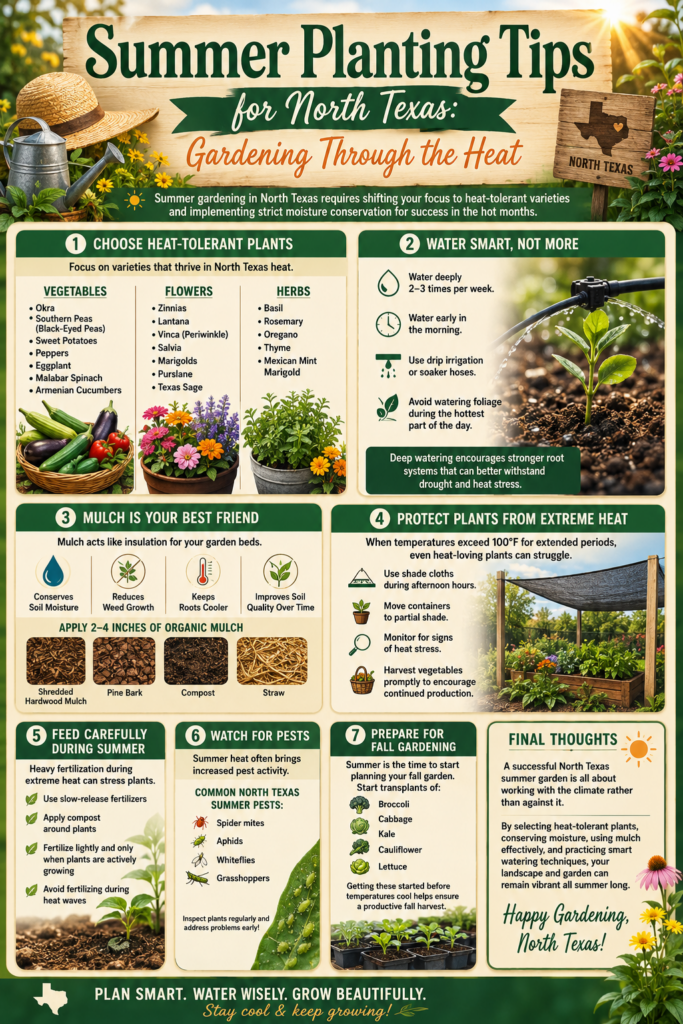
Summer gardening in North Texas requires shifting your focus to heat-tolerant varieties and implementing strict moisture conservation practices. With temperatures regularly climbing into the 90s and 100s, successful gardeners adapt their planting strategies to help plants thrive despite the challenging conditions.
Choose Heat-Tolerant Plants
Not all plants can handle the intense Texas summer heat. Focus on varieties that are proven performers in North Texas:
Vegetables
- Okra
- Southern Peas (Black-Eyed Peas)
- Sweet Potatoes
- Peppers
- Eggplant
- Malabar Spinach
- Armenian Cucumbers
Flowers
- Zinnias
- Lantana
- Vinca (Periwinkle)
- Salvia
- Marigolds
- Purslane
- Texas Sage
Herbs
- Basil
- Rosemary
- Oregano
- Thyme
- Mexican Mint Marigold
Water Smart, Not More
One of the biggest mistakes gardeners make during summer is shallow, frequent watering.
Best Watering Practices:
- Water deeply 2-3 times per week rather than daily.
- Water early in the morning to reduce evaporation.
- Use drip irrigation or soaker hoses whenever possible.
- Avoid watering foliage during the hottest part of the day.
Deep watering encourages stronger root systems that can better withstand drought and heat stress.
Mulch is Your Best Friend
Mulch acts like insulation for your garden beds.
Benefits of Mulching:
- Conserves soil moisture
- Reduces weed growth
- Keeps roots cooler
- Improves soil quality over time
Apply 2-4 inches of organic mulch such as:
- Shredded hardwood mulch
- Pine bark
- Compost
- Straw
Protect Plants from Extreme Heat
When temperatures exceed 100°F for extended periods, even heat-loving plants can struggle.
Consider:
- Shade cloths during afternoon hours
- Container relocation to partial shade
- Increased monitoring for signs of heat stress
- Harvesting vegetables promptly to encourage continued production
Feed Carefully During Summer
Heavy fertilization during extreme heat can stress plants.
Instead:
- Use slow-release fertilizers
- Apply compost around plants
- Fertilize lightly and only when plants are actively growing
- Avoid fertilizing during heat waves
Watch for Pests
Summer heat often brings increased pest activity.
Common North Texas summer pests include:
- Spider mites
- Aphids
- Whiteflies
- Grasshoppers
Inspect plants regularly and address problems early before populations grow.
Prepare for Fall Gardening
Believe it or not, summer is also the time to start planning your fall garden. Late summer is ideal for starting transplants of:
- Broccoli
- Cabbage
- Kale
- Cauliflower
- Lettuce
Getting these plants started before temperatures cool helps ensure a productive fall harvest.
Final Thoughts
A successful North Texas summer garden is all about working with the climate rather than against it. By selecting heat-tolerant plants, conserving moisture, using mulch effectively, and practicing smart watering techniques, your landscape and garden can remain vibrant throughout the hottest months of the year.
With a little planning and attention, your garden can continue producing beautiful flowers, fresh vegetables, and healthy plants all summer long—even under the Texas sun. 🌞🌻🌿